

- This event has passed.
Delicate Beauty, Fierce Devotion: Samurai Armor & Festival Dolls of Japan
RC 270 • Regnier Center • The Cube • Second Floor
View a PDF of the Exhibit Brochure
Delicate Beauty, Fierce Devotion: Japanese Models of Health, Safety, Strength, and Courage
Samurai Armor & Festival Dolls of Japan
The exhibit Delicate Beauty, Fierce Devotion highlights the traditions of Japan’s celebrated warrior culture and family rituals, featuring intricately crafted Samurai armor alongside exquisite dolls displayed for Girls’ Day and Children’s Day. From protective ō-yoroi (great armor) to Hina dolls believed to shield daughters from harm, these objects embody Japan’s devotion to health, safety, strength, and courage—values passed down through generations.
Featured in this Exhibit:
Traditional Samurai Armor Display
The Samurai armor on display in our exhibit area is a replica of traditional Samurai armor worn many centuries ago in Japan. The manufacturer of the armor, Marutake Sangyo, is Japan’s, and the worlds’, premier producer of fine Samurai Yoroi Armor. Located in Satsuma-Sendai city of Japan’s southwestern Kagoshima prefecture, the firm’s reputation for creating products of unparalleled quality has given them more than a 90-percent share of the Japanese armor market. From television dramas, such as Yoshitsune, to feature films, including Akira Kurosawa’s classics, Kagemusha, and Ran, Marutake Sangyo has shared the spirit of the Samurai with the world. Having produced thousands of suits of armor, their clientele extends from the entertainment industry to temples, museums and even the Queen of England.
Japanese Hina Doll Display
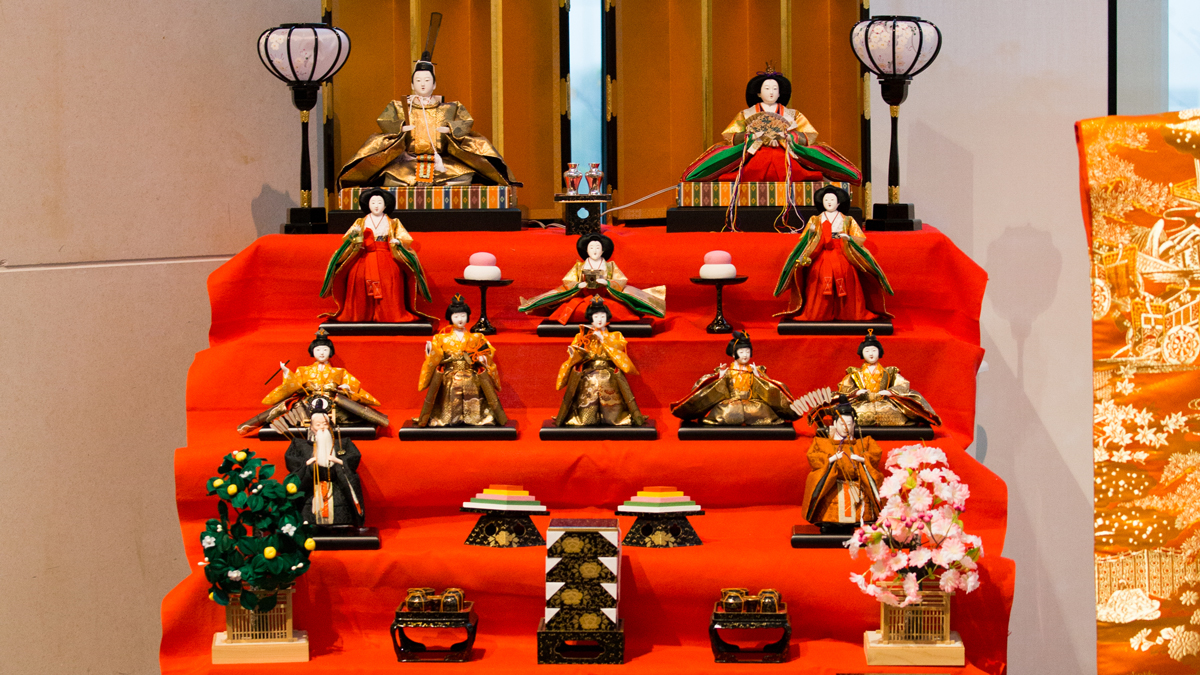
Also known as Hinamatsuri, “girl’s day” is celebrated each year on March 3. During this holiday, families wish for the health and happiness of their daughters and display Hina dolls in the home. A traditional Hinamatsuri doll set is on display at the festival. Japanese traditional dolls are known by the name Ningyo in Japan, which literally means human shape. There are various types of Japanese dolls, one traditional type is for festival celebrations such as Hinamatsuri, the doll festival, or Kodomo no Hi, Children’s Day.
Children’s Day (Boy’s Warrior) Doll
Also on display is a beautiful “musha ningyo” warrior doll in a samurai costume. May 5 of each year is a National Holiday that celebrates Children’s Day in Japan. Originally the day was celebrated as “Boy’s Day” to correspond to the Doll Festival for Girls (where families display the Hina Dolls that is held on March 3. However, the symbols of courage and strength mainly honor boys on May 5. It is the custom for families with male children to fly Koinobori (large fish flags) outside of the home. They represent a symbol of success. Families also eat chimaki and kashiwamochi (different types of special rice cakes) and display warrior dolls (“musha ningyo”) in the home during this celebration.